





Author: Debashish Banerji
New Thinking Allowed: The Power of Mantra
Savitri as Future Poetry: Creativity and Messianicity
Symposium on Bakhtin, Derrida and Sri Aurobindo’s Savitri, organized by Kanchan Ghosh, Kolkata, India on 3/6/2022.
The Crisis of Civilization, the Genius of India and Sri Aurobindo and the Mother
Talk given for Swatantra Bharat 75, India on 2/21/2022.
Re-Orienting a Posthumanist Orient in the Co-constitution of the Humanities and Technology
Talk given for the symposium Humanities Beyond Disciplines, organized by the Department of English and IQAC, Sammilani Mahavidyalaya, Kolkata, India on 7/24/2020.
View at: https://youtu.be/NlM1GIzXzSg
Haikus for Thich Nhat Hanh
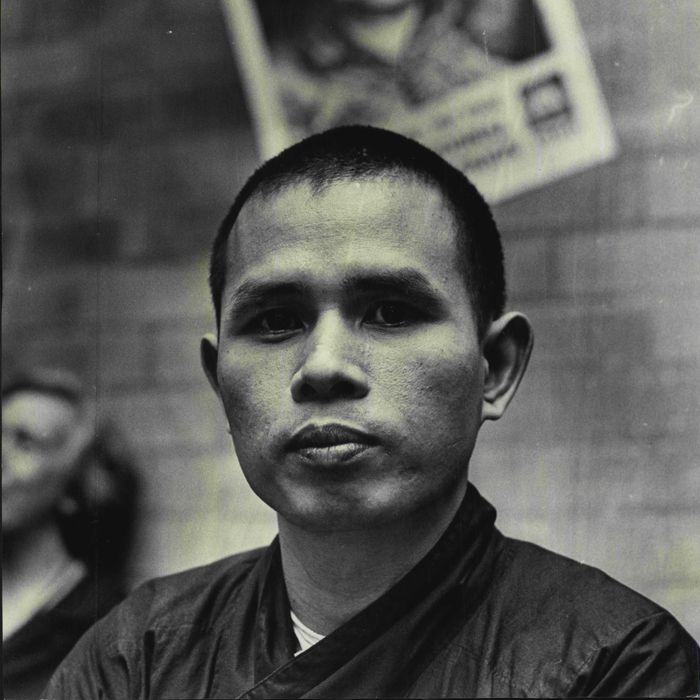
1. walking on water
your steps of silence
leave no trace
2. waking, dreaming
neither is real
both waking dreams
3. falling leaf
where did it go?
its still on the tree
4. space between us
not more not less
the world
What is Contemplative Studies? An Introduction to the Course Contemplative Traditions and Practices
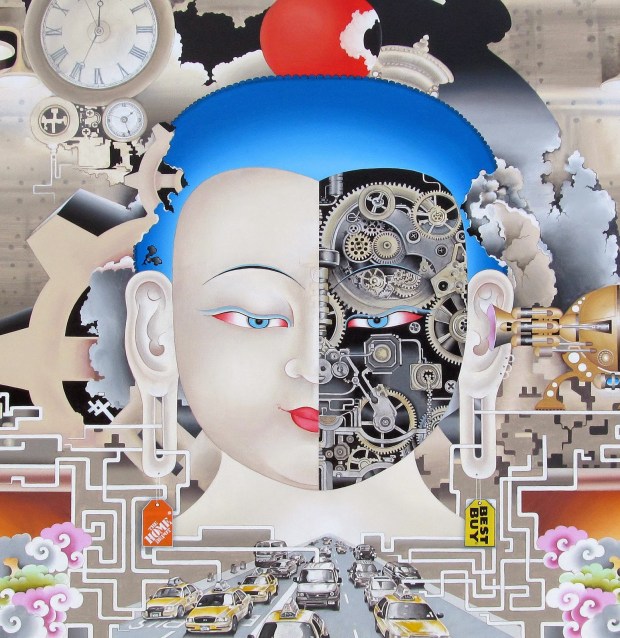
Contemplative Studies is a recent field that endorses first person and third person views in academic discourse. Hence it encourages “scholar-practitioners.” The first person aspect is encouraged but not always necessary as personal practice. However even if one is not a practitioner of the field one studies and discusses, the attitude should not be one of purely objective and etic observation and analysis but of a relational knowledge that includes subjective engagement and reflection at the level of the experience. In either case the subjectivity is involved along with objectivity at the level of contemplative experience. For this one needs a critical subjectivity. To be a “scholar practitioner” implies this division of experiencing subject into the experiencer and observer and from the observer to the communicator. The subject is the experiencer and the object is the experience on one side and the language community on the other. Between the subject and its objects is a range of relations between subjective and objective knowledge. At the far end of the subject is the experience of the subject. This experience is irreducible and cannot be observed or communicated in its essence. This is known as the hard problem of consciousness. It is of the nature of the knowledge that we have of our self-existence; it is self-evident knowledge and is a difference in kind from reflexive knowledge, which is observable and describable. At the other end is objective knowledge. Science has tried to stipulate the basis of universal objective knowledge as that which is measurable using universally agreed upon measurement standards and communicable using universally agreed upon conventions of logic in a universally agreed upon denotative language. A denotative language is one in which words have fixed and clear meanings. Contemplative Studies does not reject this kind of knowledge. It may be called exclusive third-person knowledge. Between this and the inexpressible experiential knowledge of the subject, there are grades of subjective objectivity which mix first person and third person knowledge. At the end closest to the experience of the subject is poetry, which operates at the intersection between inexpressible experience and the categories of understanding. It’s language use is connotative, which means that words are fuzzy and have allusions based on context which communicate feelings, sensations, perceptions and moods (affect) that go beyond the fixed meanings of denotative universal language. They are not objective in the same way as scientific language but they also aim at universality through subjective precision. Much contemplative literature is of this kind. It may be poetic or it may challenge denotative language through puzzles, paradoxes, parables and analogies. Our first person accounts of contemplative states may also take this expression. Contemplative Studies accepts this kind of expression among its various forms of source material. At a first person level this can include expressions of active imagination (consider Jung’s Red Book or Black Books), journaling. introspection or varieties of what the American psychologist William James called “radical empiricism.” One recent methodology for bridging first person subjective experiences or accounts and objective knowledge that has arisen in the academy is neurophenomenology.
More usually, mediating between subjective expression using connotative language and objective expression of denotative language are frameworks that may be cultural, religious, metaphysical or ideological. These frameworks formalize vocabularies and assumptions that are understandable to a language community as forms of convention. These forms of convention constitute degrees of closure and degrees of porosity. Contemplative literature, even one’s own contemplative expressions, however poetic, is framed by one or more of these conventions, often unconsciously. This is why critical subjectivity of first person expressions must include autoethnography and auto-hermeneutics. How did we enter into a contemplative domain? Contemplative traditions, practices and experiences come to us in the postmodern global world often like commodities in a supermarket, without any acknowledgement of their origins and the distances they travel or the hands they pass through. The marks of colonization and capital are everywhere around us, however much care is taken to erase them. On the other side, non-Western nations have often accepted to stereotype themselves nationally or regionally through Orientalisms. Beyond this our languages have their own histories of power dynamics and cult closures. At the same time, there is the fragrance of long traditions, of ancient histories passing experiences in communities through varied cultural forms, oral, written and performed, that grow in density and become culturally normalized over time. And there is the beauty of rebirth, of experiences that offer themselves under new conditions after having vanished for centuries. The autoethnography of the scholar practitioner of Contemplative Studies needs to be both emic and etic. An emic account understands and expresses experience in terms of the inner realities of language communities who have made these experiences into their tradition. Their behaviors code for a context which is often hidden and needs “thick description.” On the other hand, to look at oneself “from the outside,” in an etic account, is also necessary to deconstruct the closures and assumptions of sectarian histories and allow translations across borders. In an autoethnography which aims at a future of convergent pluralism, we have to become conscious of the dresses worn by our experiences, be able to acknowledge them as forms of becoming involved in both global and internal politics and offer them to academic language communities in ways which mediate plural conversation partners, so that they continue to aim for precision while being adapted for crossing borders.
All expression is a form of translation from the unspeakable experience to the conventions of a language. A particular expression may feel familiar and comfortable because one is accustomed to that form of expression or has practiced the use of that language and made it her own and also because others have used that language to express similar experiences forming a tradition of expression. But as an academic, irrespective of the language, discourse about contemplative literature implies a second level of translation – from the subjective expression to a careful unpacking of the nuances in a universal language. In being a scholar-practitioner, expressing contemplative experiences in a non-English language and introducing it to an English-speaking academic community means to unpack the nuances of the foreign language. Some words and phrases translate easily, some have approximate translations, some have cultural contexts which don’t carry over in translation and some have no corresponding translation of experience. One has to identify these zones of hermeneutic opacity and annotate them in “thick descriptions.” Such a process is a handshake between emic and etic descriptions. Can we locate something more universal beyond the boundaries of a culture? If not, one can leave it there. If we do, it takes a creative effort to translate across boundaries and communicate/transmit experience. We may ask, even if one does, will the essence be lost in translation? The question here is what one means by essence. There is an essence of a cultural expression which remains within the walls of the culture. For that matter, there is an essence to subcultural experiences of a cultural expression because cultures such as languages have dialects which carry meanings which are specific to subcultures. Further, each person experiences any expression in a unique way each time they encounter it. This is an aspect of the hard problem of consciousness. One may make it one’s research in contemplative studies to identify the elements of such untranslatable specificities and what they code for in experience. At the same time, all cultural expressions are dresses for impersonal experiences of consciousness which can be transmitted across borders in different dresses. One may make this one’s research in contemplative studies.
What is Modernity? An Introduction to the Course Modernity, Colonialism and Transcultural Hermeneutics
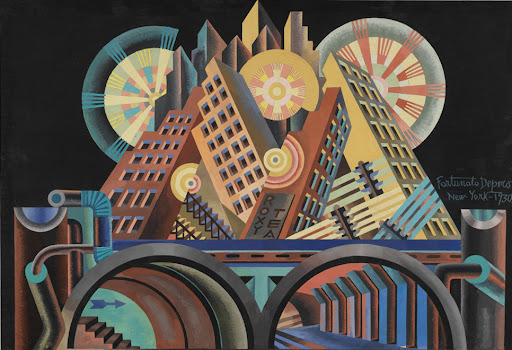
There are several views and attitudes on what modernity means. The word is etymologically linked to an existence in the present. But “the present” is always a slice of time, so the question, what is modernity, from one point of view, remains one of periodization. For some, modernity may be the 21st century. But this is more properly contemporaneity, meaning being-with time or being-alongside time rather being-in existence or being-in time. The difference between being-in time and being-with time is one of the static and the dynamic. To be-in is to exist in a medium of definable temporality while being-with supposes an independent entity with which we are in relation, which moves with us or rather, with which we move, which we’re trying always to catch up with. The 21st c. is also known as the Anthropocene Era. We will have occasion to consider these terms later. For some, modernity is the period from the 1980s. But this is more properly the postmodern era, when the idea of a single or homogeneous modernity is put to question. For some, it is the 1960s which inaugurate modernity, but this is more properly post-War and postcolonial modernity, an era which suppressed aggressive racial and ethnocentric white nationalism while pluralizing cultural histories in the form of independent nations. It was also the era inaugurating a technological ontology, which means it normalized global transport and telecommunication technologies, putting them at the service of multinational capital. For some, modernity, starts with the 20th c., but this is the period of philosophical and cultural modernism and nationalism, when the modes of thought proper to modernity began being challenged as did the forms of art normal to modernity. For some, modernity begins in the 19th c., but this is more properly an Industrial modernity, marked by mass production based on fossil fuel technology, modular production and assembly line manufacture. It is also the birth of a political modernity with the aftermath of the American and French revolutions with their ideals and constitutions. For some it begins in the 17th c., and here we’re coming closer to the source of the changes leading to our times, seen as a way of being.
The 17th c. is marked by what is called the European Enlightenment. This is an intellectual revolution that consolidated the movement known as the Renaissance started in the 15th and 16th centuries, to decenter the epistemological and political authority of the Church. This intellectual revolution was not a homogenous movement or a conspiracy. It arose in various minds but gathered strength by consolidating its common elements and building its views based on these. We may refer to this as an epistemological revolution in its external aspect, because it led to the starting of the institutions of higher education which we call universities today. Though the university as we know it was more properly born in the 19th c., its foundations were laid in the 17th c. in terms of the specialization of disciplines and the formalization of methodologies that we today think of as scientific. This external aspect rests on its internal aspect, that of a privileged definition of the human as a rational being. Reason came to replace and stabilize the transcendental authority of the Father-God of the Church in authorizing knowledge. For several of the early Enlightenment thinkers, it was not a loss of faith but a change of faith that this represented. Reason was God’s prime faculty, the Logos, in early Christian thought equable with Christ, now theorized as an immanent property of the human, the chosen elect of God. The exercise of Reason could reveal the secrets of the Creation and complete the unfinished work of God in building a perfect world. This kind of faith invested the thinking of a class of Enlightenment theology known as Deism. Along with this the objective focus shifted from Spirit to Matter, as a firm universal datum available empirically to all, rather than an invisible essence that needed the transcendental authority of the Church for validation. These displacements stabilized a historical rupture from the “medieval period,” now dubbed “the Dark Ages,” characterized by dogma, superstitions and cruel Church authority exercised through frightful Inquisitions. But the decentering of epistemological authority, if it heralded reason and democracy, also brought finitude and relativism to the field of human knowing. Knowledge now needed methodical piecing together to fulfill the assumption of recovering the Wholeness of the Logos. The finitude of human lives in time and their distribution in space required protocols for the passage, transmission and translation of knowledge across borders of time and space. This was achieved through the formalization of the scientific method, not merely as a method of knowing but as the foundation of academic discourse, research methodology, to be instituted in the new halls of learning, the university.
The contradictions and consequences of this historical rupture need to be contemplated. In centering human identity in Reason, it automatically distanced and objectified its “others,” those perceived not to be invested with the privilege of Reason, women, children, romantics, mystics, madmen, the illiterate, animals, plants, the earth, the non-living, the non-Western human. To be bound to the rational subject, these had to be made property and subordinated, assimilated or eliminated. Born in a feudal Europe, still patronized by royal courts and churches, the Enlightenment’s project of Knowledge mixed inevitably with the designs of Power. Its expansive/expensive voyages of discovery led inevitably to colonization, exploitation, possession and enjoyment, capitalism and the world market dominated by the West. Its project of universal knowledge extended to a colonization of the life-world in the form of a new institution, the knowledge academy, which yoked all humanity into its world-making design. At the same time, its project of power extended itself in the form of two new institutions, the multinational corporation, an engine of private profit-making, and the nation-state, ostensibly serving the will of the population through rational governmentality, but in fact, securing the designs of capital. As we can see, binaries proliferated everywhere, white and colored, reason and emotion, mind and life, mind and body, science and humanities, with the first in all these pairs subordinating the second. The privileging of Matter as the object of Knowledge and Mind as its subject exiled Spirit and subordinated the intangible aspects of human emotion. This collusive arrangement, coupled with the drive for universal and absolute Knowledge and its use to perfect the world for human habitation and enjoyment led to the privileging of Science and Technology in the academy and the utilization of their research to fuel the corporate motives of the market economy. The commodification of life that this resulted in has led to the present form of social life, extending individual freedom with one hand and tearing communities apart into a condition of alienation with the other. The subjective isolation of a rational humanism has aided the universal capitalization of society and the commodification of space, time, beings and things.
In tracing modernity back to its roots in the Enlightenment and the Renaissance, we encountered the chapters in the progress of modernity. These chapters mark an advance in the narrative of objective knowledge and technology at the service of capital and ideology. Colonialism, Industrialism, Modernism, Nationalism, Technological ontology, Postmodernism and the Anthropocene Era are the names of these chapters. From the start of its world-making ambition, modernity assumed a perfected universal condition while it encountered its many others. Its conflicted motives sought on the one hand to exploit its others for profit and on the other to make them one with itself through rational education, its “white man’s burden.” Through the 20th c., while its exploitative and corporate designs proliferated, its “others” sought their independence. The global spread of modernity inaugurated the age of world history. Whereas cultures and religions remained in relative isolation in premodernity, they were forced into cohabitation and relativized within a space-time of global and contemporary co-existence, all cultural difference subordinated to the prehistory of the modern West and needing to come to terms with their self-evaluation. The 20th c. was racked by two World Wars which brought the world close to the brink of extinction. These wars were also elements in the advance of modernity, with feudalism and/or racialism and ethnic nationalist subjectivism pitted against liberal universality. The post-World War 2 period saw what seemed the elimination of feudalism, racialism and ethnocentric nationalism, but in fact, only their suppression, in favor of liberal universalism. It also saw the end of colonialism and the rise of non-Western nations, all it seems, in service to a rational liberal universality covering the globe through the agency of multinational corporate capital supported by the universal knowledge academy, the universal governmentality of nation-states and advanced integrative technologies. This world homogenizing stage of modernity is one of global neo-liberal capitalism, that has brought us into the 21st c., the Anthropocene Era of contemporaneity. We refer to this period as the Anthropocene, as a geological age descriptor, because the human footprint now spans the earth. There is no place on earth which the marks of human production and consumption have not modified, human surveillance not mapped. Our individual state of being has transformed to the non-local and omni-temporal, technologically prostheticized to an instantaneous global cyberspace. It seems we have reached an apotheosis not even dreamed of by the thinkers of the Enlightenment, an individualized Omnipresence, Omniscience and Omnipotence without precedent.
But is this really the hour of modernity’s triumph? And what about the “others” of modernity under this corporate empire? The progress of modernity has not been without its trials and challenges. From the start of the 20th c., both the sciences and the arts revolted, it seems, against the ontology, psychology and cultural norms of post-Enlightenment modernity. Modern Physics, in probing both nanoscopic and astrophysical ends of cosmology, encountered paradoxes which a classical materialist model could not solve. What made it even more problematic is that these paradoxes of Quantum Physics seemed to suggest that Mind could not be extricated from Matter in our experience and knowledge; in other words, whatever we call the objective world is always already entangled with the subject. Moreover these paradoxes seemed to point to nonlocality and atemporality at the foundation of reality. In the arts, whether in literature or poetry, painting or music, new experimental forms arose which challenged the objective perception of reality. Language defied syntax and arranged itself in a stream of consciousness or in non-propositional bursts of intuition; art rejected the norm of perspective, modeling and chiaroscuro which had become the mark of civilized visual representation since the Renaissance and replaced these with the subjective distortion of expressionism, cubism, abstraction and surrealism; music experimented with modes or alternative temporalities. All these changes constituted the cultural revolution known as Modernism, a countercultural response to modernity. The subjectivism of the arts also acknowledged their recognition of their marginalized place in modernity, their “uselessness” in a world defined by technological progress. Their response inaugurated a global cultural politics, a critique of modernity and an acknowledgment of their alienation and precarity. The new academic and therapeutic discipline of psychology, in the hands of practitioners such as Sigmund Freud and Carl Jung, declared the rational subject to be the tip of the iceberg of the human psyche, determined by a sunken Subconscious and Unconscious of irrational drives in the case of Freud and a Collective Unconscious of archetypes according to Jung. Towards the end of the 19th c., the analysis of the modern economy by Marx exposed the tensions and internal contradictions of a social form based on private property ownership and capitalism and theorized an ideal classless society, albeit based on rational foundations. Among philosophers, Nietzsche at the end of the 19th c. proposed the Will to Power as more primordial than the rational will to knowledge, the latter, in fact, as a form of the will to power. Based on this he also rejected the static image of the human or the cosmos, revising human identity into one without essence, subject to transit beyond itself, a destining towards an Overhuman (Ubermensch).
These intellectual revolutions did not have much of an effect on the march of technology and its capitalization into a market ontology advantaging the Western male rational subject as the privileged locus of the modern human. Through the first half of the 20th c., anticolonial struggles and two World Wars put an end to Western property “ownership” of the rest of the world and resulted in the birth of independent nations across the world. These nations had often staked their claim for independence on the right to cultural self-determination. At the same time, colonialism’s civilizing drive had worked to normalize the values of the Enlightenment through education, administration and the construction of taste. In becoming independent, the question arose of how these new nations would impact the assumptions and goals of modernity. According to the self-confidence of the civilizational superiority of the West, it was only a matter of time before the pressures of world-modernity would even out the lumpy non-modern elements, leading to a homogeneous global condition of universal Enlightenment, something Francis Fukuyama has more recently called, following Hegel, “the end of history.”
From the mid to end 1960s, the internal critique of the West gathered strength, leading to popular movements of revolt among students and workers around 1968, originating in France and other continental nations, but spreading across the world. Simultaneously, this period saw the development of a Western countercultural movement, characterized by a utopian drive to be free of corporate and governmental structures, replacing these with communitarian societies of freedom from convention and collective sharing. These movements had a worldwide impact, partly due to the cultural expressions of idealism associated with them, most prominently, music. As mentioned earlier, the 60s saw the continued advancement of technological integration under the sign of capital, largely through the invention and utilization of electronic means and devices. On the one hand this led to the wide reach of the products of the counterculture, on the other to their swift capitalization, the latter leading to a semiotic appropriation and corruption of their ideals and ultimately the demise of the movement by 1980. The element of widespread psychedelic use as an aspect of the counterculture should also not be lost sight of, as it aided a subjectivism at odds with the rational norms of modernity. The post-1968 period also saw the rise of what has been called postmodern philosophy, as an intellectual culture of critique of the values, norms, ideals and ontology of post-Enlightenment modernity. Many continental thinkers, particularly originating in France, that we today associate with the founding of postmodernism or poststructuralism, Michel Foucault, Jacques Derrida, Gilles Deleuze, Jean-Francois Lyotard, Jean Baudrillard were either participants or deeply impacted by the events of 1968, and their work was inspired by its ideals.
In the 1990s, with the advent of cyberspace and cyber-technologies, there emerged a phase of unprecedented capital integration leading to the worldwide era of neo-liberal globalization. Since this period, the world market has become increasingly borderless, nation-states increasingly tied to its global conservation and promotion. As far as the cultural differences of the non-Western world, one may see the emergence of three strands in the normalization of modernity, seen as a furtherance of post-Enlightenment ideology. One of these is the appearance of the universal liberal subject of global capital, a “mimic European.” In some cases, this subject is split in its identity between the home and the world, “modern” in its dealings in the world of global capital and “native” at home; in others there is a fuller excision of native identity in favor of post-Enlightenment modernity. A second emergence is that of the appropriation of cultural difference as a flavor of neo-liberal consumption. The tourist industries, the entertainment industries, the display industries, the industries of sensory experience, catering to taste, fashion, music and voyeuristic enjoyments, have witnessed a semiotic recoding into endlessly proliferating flavors of commodified multicultural consumption. The third emergence, is one which has refused assimilation into modernity. It has either rejected modernity entirely, embracing forms of nativistic or other premodern identity against modernity or claimed a dialogic right to participate in the creation of alternative modernities. It is this last possibility which interests us in this course. More pervasive in our time, however, is the first of these last options, that of the rejects of modernity, who reject it in turn, using its own devices to hold their own against it. A prescient book, written by sociologist Benjamin Barber, spells out a probable future based on the contest of these realities. Titled Jihad vs. McWorld, it envisages a world where the political state, whether national or global, has been bankrupted, the socius taken over by the uncontrolled universalization of capital in the form of ethnic-flavored global franchises. Against this, the disenfranchised rejects of modernity, whether in the name of orthodox religion or race or clan identity, have constructed their own distributed stateless anachronistic rogue societies existing by parasiting on the networks and resources of global capital and at perpetual war against the franchised corporate liberal world.
This brings us to the Anthropocene Era of the 21st c. As mentioned at the start of this essay, we live in an age of the apotheosis of Enlightenment ideals in the form of what seems an ontology of omnipresence, omniscience and omnipotence. But this apparent triumphal hour of abundance and freedom is actually an appearance in which the global capital machine lives in all the inhabitants of the world, albeit through its wireless and non-local invisibilization. Seemingly liberated to consume whatever we want, our subjectivity is “dividualized” (i.e. divided and colonized through dynamic algorithmic profiling and targeting of its psychic fragments) by the transhuman technologies of neo-liberal capitalism. These have been called “control societies” by the philosopher Gilles Deleuze. Moreover, as we have seen, this apparent apotheosis has been achieved through the othering and exploitation of the non-rational world, the geosphere, the biosphere and the cultural sphere. All these foundations on which we stand are today in revolt, the engines of post-Enlightenment capital stymied by a climate crisis, a global pandemic and a proliferation of savage orthodoxies. More than ever before, this state of pitched ideological war needs healing. Towards this end, we return to the possibility of alternative modernities, of the participation of multiple cultural histories in creating a relational future of porous and mutually transformative interchanges. What are the conditions for such a worlding? A deep reflection on these conditions is the invitation of this course.
Vijnanadvaita Vedanta: The Lineage of Ramakrishna,Vivekananda and Sri Aurobindo
Traditions of Yoga in Existential Posthuman Praxis: Response to Francesca Ferrando’s “Philosophical Posthumanism”

Francesca Ferrando’s Philosophical Posthumanism is a wide-ranging book that introduces the foundations for a change of human self-conception in our times. As such it touches on history, epistemology, ontology and praxis. It marshals a vast web of interrelated ideas and thinkers that illumine the field from many directions. My approach in this discussion considers three important chapters in the book, “Technologies of the Self as Posthumanist (Re)Sources,” “Posthumanist Perspectivism,” and “Antihumanism and the Ubermensch.” The two thinkers who these chapters principally address are Friedrich Nietzsche and Michel Foucault. The chapter on Technologies of the Self looks at the colonized “others” of the West and by extension at postcolonial subalterns and non-human others. These peripheries and outsides problematize the hegemonic humanism of modernity by their ex-centric forms of self-making based on alternative cultural histories resistant to the norms of modern humanism. As examples, Ferrando refers to oral histories, folk art, performance practice and spiritual praxis. Ferrando describes spirituality as “the tendency to conceive existence more extensively than the ordinary perception of individual beings.” She contrasts it with religion, which she sees as “characterized by a set of principles (dogmas), which defines its specificities… and empirically sustained by hierarchical structures based on acquired knowledges, needed in order to preserve those teachings through historical changes.” In the chapter on Posthumanist Perspectivism, Ferrando challenges the definition of epistemology as a seeking for universal and absolute knowledge in favor of a plurally interpreted view of reality based on the philosophical vision of Friedrich Nietzsche. As an example from a non-Western traditional source, she offers the Jain philosophy of anekantavada, which extends a fundamental compassion to all beings based on their right to difference. Such a difference is not merely a difference of opinion or knowledge but a difference in the mode of embodiment and a difference in the trajectory of becoming, which leads to its own kind of knowledge.
This brings us to the question of the will to power, also dealt with by Ferrando in this chapter. Ferrando invokes Karen Barad in this regard who speaks of a fundamental agential ontology that is omnipresent from the quantum level to the most complex organisms and organizations. In Nietzsche’s case, the will to power is also related to the Ubermensch or Overhuman, the power over oneself leading to a posthuman destining. In the chapter on Antihumanism and the Ubermensch, Ferrando introduces this lineage of the posthuman, but eventually rejects Nietzsche’s Ubermensch on the ground that he premises it on a derogatory supercession of the “brute” or animal. Rather, following Rosi Braidotti’s adaptation of Deleuze and Guattari, Ferrando sees the will to power and posthuman perspectivism in terms of a refusal of essentialism and an inter-species transversal bonding, which may be called nomadic. Adapting the language of Pierre Teilhard de Chardin, we may call this individuation as relational cosmogenesis.
All these related ideas bring up the Indian field of spiritual praxis known as yoga. The term yoga has today entered the English lexicon, but like the term avatar and many others, this entry is a hegemonic appropriation and not an engagement. In India itself, yoga has plural meanings spread over a field that may best be characterized as technologies of becoming. This can be assimilated to Nietzsche’s will to power as self-exceeding and to an embodied and existential posthuman perspectivism. Ferrando’s discussion in this chapter could have been enhanced by this consideration.
Karl Jaspers, in his astute short introduction to the Buddha in his Great Philosophers series, Volume 1, draws attention to the difference between the place of thought in western philosophy and in yoga. Referring to the Buddha, but in a manner common to the field of yoga, he says:
Logical ideas create space by freeing us from our bonds with the finite. But it is only by meditation that truths are reinforced and established, that full certainty is attained. It cannot be said that one is primary, the other a mere consequence. One is, rather, the confirmation and guarantee of the other. Each in its own way prepares us for the truth…. In speculation, meditation and ethos alike, it is the human will that sets the goal and attains it… That is why Buddha is forever calling for an effort of the will. All a man’s powers must be engaged.
He concludes his introduction by drawing a central lesson from the Buddha’s life. He says, “It points to the questionable essence of man. A man is not what he just happens to be; he is open. For him there is no one correct solution.”
It is clear from these quotes that, as with Nietzsche, Bergson or Deleuze, Jaspers sees the place of thought not as a faculty for establishing a static and absolute Truth but as a servant of the will which is central to life seen as a problem of becoming. It is also important to note from these remarkable passages how close Jasper’s depiction of the Buddha is to what Ferrando would, I feel, equate to posthuman perspectivism.
Returning to technologies of the self, seen as a response to the hegemony of normative humanism, it may be of interest to note that what is called yoga in the West today, a regime of physical posture and breathing at the service of the fitness industry and stress-free capitalism, took its rebirth in modern times as a technology of anticolonial biopolitical resistance in India. Further, when Vivekananda introduced “yoga” in his lectures at the Parliament of World Religions at the turn of the 19th/20th c., it is exactly as an alternative and plural telos of human becoming to the static image of the human, and of human becoming as the acquisition of absolute knowledge and cosmic control which characterizes modernity. One can read this too as a form of anticolonial resistance, of an epistemological revolution in alignment with Nietzsche’s and Jasper’s existentialism and contemporary philosophical posthumanism.
This revisionary view, both of epistemology and of yoga, made one with contemporary posthumanism, can offer a much needed praxeological toolbox for a participatory science of relational cosmogenesis in which individuals approach the problems of global co-existence as plural collective problems of becoming. Perhaps yoga, seen in this light, can be the sequel to Ferrando’s philosophical posthumanism, opening the technologies of the self towards Nietzsche’s overhuman, seen not as a rejection of the animal but a deep identity through relationality with all the beings of earth and world.